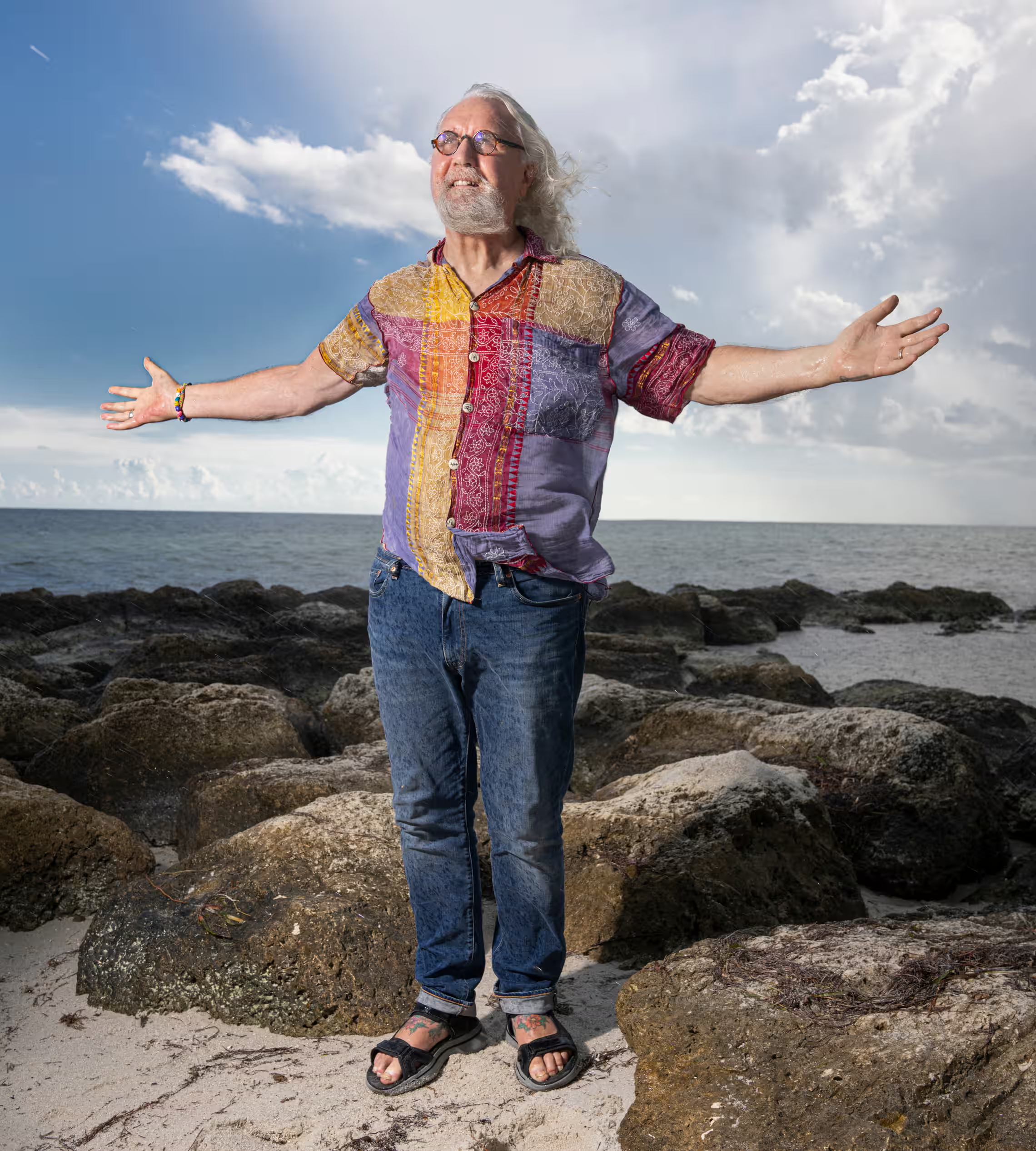
Faithfull related to the poems of the Romantics and often used them to articulate her own feelings.
By Gemma Ware
Marianne Faithfull, the London-born singer with an inimitable voice, has passed away at the age of 78. She was known for many things: she was a pop star, an actress and a muse. But she was probably best known for her voice.
When she first entered the world of pop in 1964, her high-pitched tones rang with mellifluous vibrato. As she grew older and lived an increasingly excessive lifestyle, she developed a rasp – a quality borne of her unique experiences.
Faithfull’s final musical releases were works that incorporated Romantic poetry in different ways. She Walks in Beauty (2021) is a spoken-word album of canonical Romantic poetry by the likes of Lord Byron, Percy Shelley and John Keats. Songs of Innocence and Experience 1965-1995 (2022) is a chronological retrospective of her career which uses the name of William Blake’s poetry collection (1789) as its title.
As a PhD student focused on the legacy of Romanticism in 1960s and 1970s popular music, I’ve closely examined Faithfull’s engagement with Romantic literature throughout her career. These final two albums represent a beautiful culmination of her artistic journey, and are a testament to her unique voice and strong poetic influences
Songs of Innocence and Experience 1965-1995, like Blake’s poetry collection, is broken up into the sections Innocence and Experience.
The Innocence portion of the album covers Faithfull’s youth, featuring early hits such as This Little Bird. Her early sound incorporated baroque pop instrumentation, including harps, harpsichord and horn arrangements (Come and Stay with Me), as well as folk styles with the acoustic guitar at the centre of the sound (Cockleshells).
Faithfull’s voice in this section portrays her as an “innocent” girl in pop stardom, as its high pitch and pure tone embody a sense of naivete that is also reflected in her lyrics about young love, such as in Come and Stay With Me:
We’ll live a life no one has ever known
But I know you’re thinking that I’m hardly grown
But oh thank God, at last and finally
I can see you’re gonna stay with me
There is a noticeable shift in the Innocence section of the album with the song Sister Morphine. As the song was made in collaboration with her then-boyfriend, Mick Jagger, it features a noticeably more rock sound in contrast to her previous pop productions. You can also hear subtle changes in Faithfull’s voice: it cracks and sounds strained in places.
The song’s lyrics (“Please, Sister Morphine, turn my nightmares into dreams”) reflect the darker side of the mythologised “swinging sixties” lifestyle and its drug culture, which Faithfull has come to symbolise.
Blake’s Songs of Innocence features a piper as the presiding narrator over the poems. In contrast, Songs of Experience is meant to be heard through the voice of an ancient bard, as established in Introduction to the Songs of Experience:
Hear the voice of the Bard!
Who Present, Past, & Future sees
Whose ears have heard,
The Holy Word
That walk’d among the ancient trees.
The Experience section of Faithfull’s album features music from Broken English (1979) and her re-recording of As Tears Go By, from Strange Weather (1987). The songs in this portion of the album exhibit her completely transformed voice: from piper to bard, it is deeper, raw and more weathered as a result of her struggles with addiction and bouts of illness. This brought a distinct edge to her music, marking a new phase in her career.
Beyond the qualities of her voice, Faithfull’s song selection reflects Blake’s notions of Experience. Strange Weather (“Will you take me across the Channel / London Bridge is falling down”) aligns with Blake’s London geographically and thematically, as both explore entrapment and decay. Faithfull’s depiction of societal monotony, as in “Strangers talk only about the weather / All over the world / It’s the same …” echo Blake’s “charter’d street(s)” and “mind-forg’d manacles”.
Faithfull’s connection to Romantic poetry is most overt in She Walks in Beauty, which she made with Warren Ellis (Australian composer and member of Nick Cave and the Bad Seeds). In this album, she recites Romantic poetry set to Ellis’s music.
The poems she selected to recite are all by male poets and many feature voiceless female subjects, such as Byron’s She Walks in Beauty or Thomas Hood’s The Bridge of Sighs. On the album’s liner notes, Faithfull described how she related with these women, particularly Alfred, Lord Tennyson’s Lady of Shalott.
The Lady of Shalott is a woman cursed to live alone in a tower near Camelot – unable to look directly at the world, forced to weave what she sees in the mirror. Faithfull uses the Lady to reflect on the pressure she felt to conform to the expectations imposed on her by the press and music industry. There is a parallel between the Lady’s forced isolation and her struggles with being controlled and defined by external forces, as she explained:
Do I identify with the Lady? Oh yeah, always. I’m nothing like the Lady of Shalott, but I guess I wanted to be … When Mick Jagger wrote the lyrics for As Tears Go By, he knew this poem. There’s a bit he always said he used from here, the thing about ‘it was the closing of the day’.
In the liner notes, Faithfull also mentioned that her love of poetry was thanks to her English teacher at St Joseph’s Convent in Reading, Mrs Simpson, and to Palgrave’s Golden Treasury, an anthology of English poetry, which she had bought as a teenager.
Faithfull’s lifelong interest in literature came to fruition in her two final projects. They exemplify how she was a pop star, muse and chanteuse – and also a Romantic.
Source: Marianne Faithfull: the singer with an inimitable voice was a Romantic poet at heart