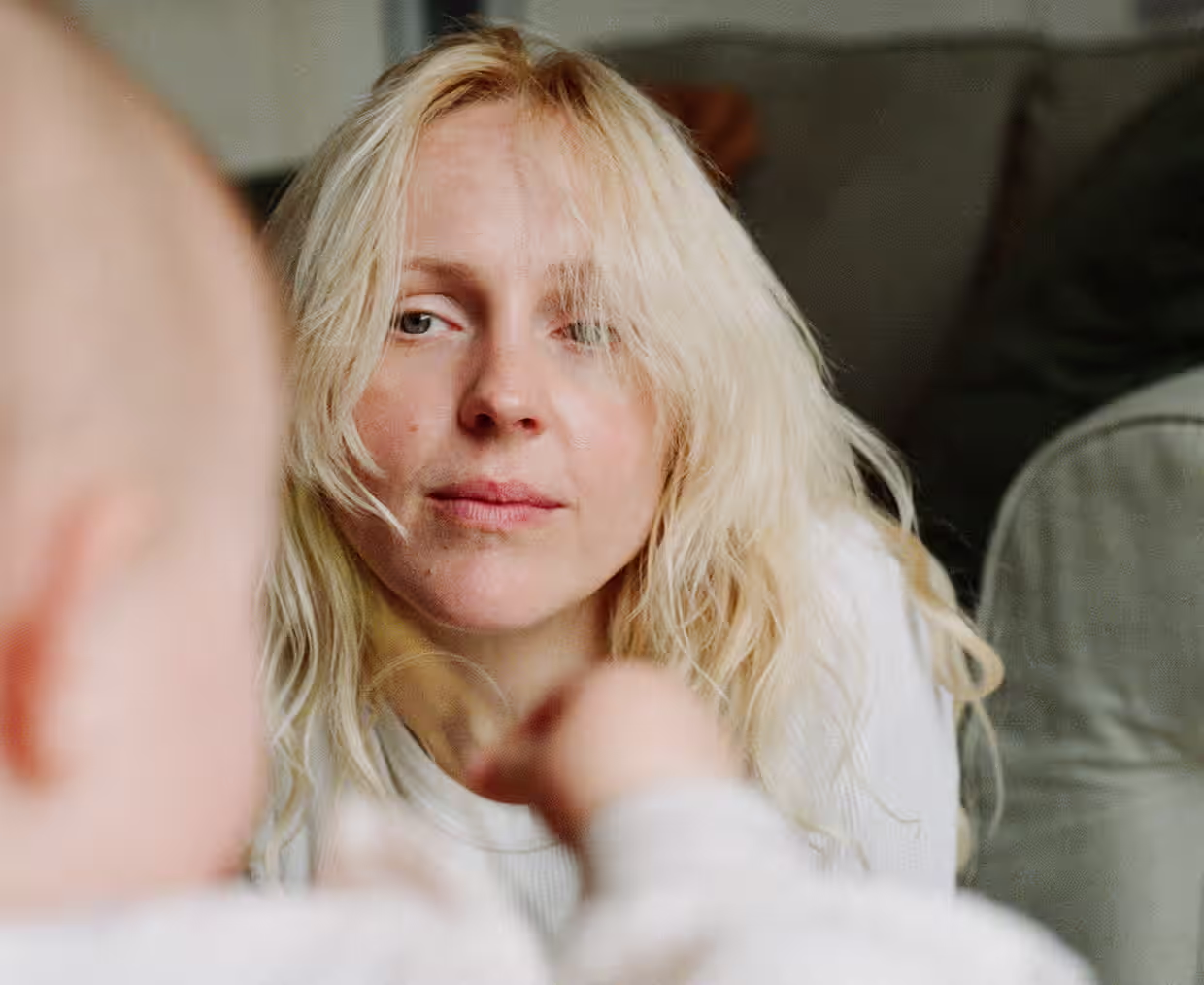
Patterns in Repeat was written after the birth of Laura Marling’s daughter in 2023. The songs reflect on motherhood, ageing and the patterns that are passed down through family over generations. The album opens with the sound of a man and a woman talking, alongside a baby cooing.
It was recorded at Marling’s home studio and at Bert Jansch Studio in London.
Domestic contentment radiates through the singer-songwriter’s eighth album celebrating the circle of life
By Lisa Wright
Patterns in Repeat is not the first time Laura Marling has written music for her child, but it is the first time she’s done so as a mother. 2020’s Song for Our Daughter was directed at an idea, and as such rippled with possibility. Its successor is a far more grounded thing, recorded in snatched half hours and imbued with considered, lived experience.
From the opening moments of Child of Mine, which begin with the domestic sounds of the musician setting up as her daughter burbles in the background, Marling invites us into a world that is gentle and nurturing. There are no drums. Most tracks are acoustically plucked, with minimal backing. Everything is centred around the sort of meditative, richly felt sentiment that’s almost physically tangible.
Patterns gazes warmly back at the generations of women before her, towards the next that she herself has borne; Looking Back is a peaceful acceptance of what the end of life might look like; Lullaby, meanwhile, is exactly that – a simple sleep song, sung to her child. Patterns in Repeat considers weighty topics – heritage, lineage and what we pass down – and strips them down to small understandings and wisdoms. It’s an extraordinarily tender accomplishment.
Glasgow singer-songwriter Lizzie Reid arrives with a fully-formed sound on her debut EP, Cubicle. It’s a warm and intimate collection of folk and rock songs that showcases her clear skill for storytelling, and a surprisingly diverse range of sounds for a compact collection. The project documents a break-up, and her first same-sex relationship. But its welcoming homespun atmosphere acts as its hidden strength. Recorded at her home in ten days before the first lockdown in March, the project truly exists within that period of stasis.
“We were kind of disconnected by what was going on in the world,” Lizzie says during our Zoom call. “Everyone was freaking out about COVID and isolation, and we were in a completely different headspace. Lockdown came about two days after Oli [Barton-Wood, the record’s producer whose credits include Nilüfer Yanya and Molly Payton] left. I remember at the time thinking, ‘wow those ten days, what a long time to just be in the house.’ Little did I know that would be the next nine months of my life.”
Despite the intimate setting, there was an underlying pressure on the recording process. “We’d already announced that we were going to be releasing music this year so this needed to be the one,” Reid says. “I had recorded a few times with the idea of releasing, but it was never quite right, I felt like it could go one of two ways, but when it came down to it, this had to be the one. I’m a very anxious person… I do always have a sense of time. There was less of that because we were at home the whole time.”
That homely quality manifests through a wonderfully close recording. The gentle fingerpicked guitars of Always Lovely, the closeness of Reid’s breath on the mic – and even the gentle meowing of her cat Ivan at the end of Seamless – all offer heartfelt textures that might not have been captured without a home recording. The sense of home continues with her bandmates, with Reid’s cousin Catriona playing cello twice across the project.