Ken Loach on ‘Sorry We Missed You,’ Rooting for Bernie Sanders, and How ‘The BBC Is a Right-Wing Org’

Sorry We Missed You

The celebrated English director opens up to Cassie da Costa about his new film “Sorry We Missed You,” the evils of the gig economy, and his issues with the BBC.

The English director Ken Loach has the rare position of being known chiefly for his leftist politics, and how he works with screenwriter Paul Laverty and producer Rebecca O’Brien to bring the lives of working-class people to screen without a tinge of nostalgia.

His latest film, Sorry We Missed You, follows a working-class Newcastle family, including the long-unemployed Ricky; his wife, Abbie, a home care worker; and their children, the rebellious Seb and clever Liza Jane. A few years out of the 2008 global financial crash, the family is buried under a pile of seemingly insurmountable debt, having taken on loans and credit to survive. Ricky wants to fast-track the family back to financial fitness, and so takes a package-delivery job, replete with a grueling 14-hour-day schedule, punitive digital surveillance, and zero company (or “client,” as the corporate overlords must be called) liability.
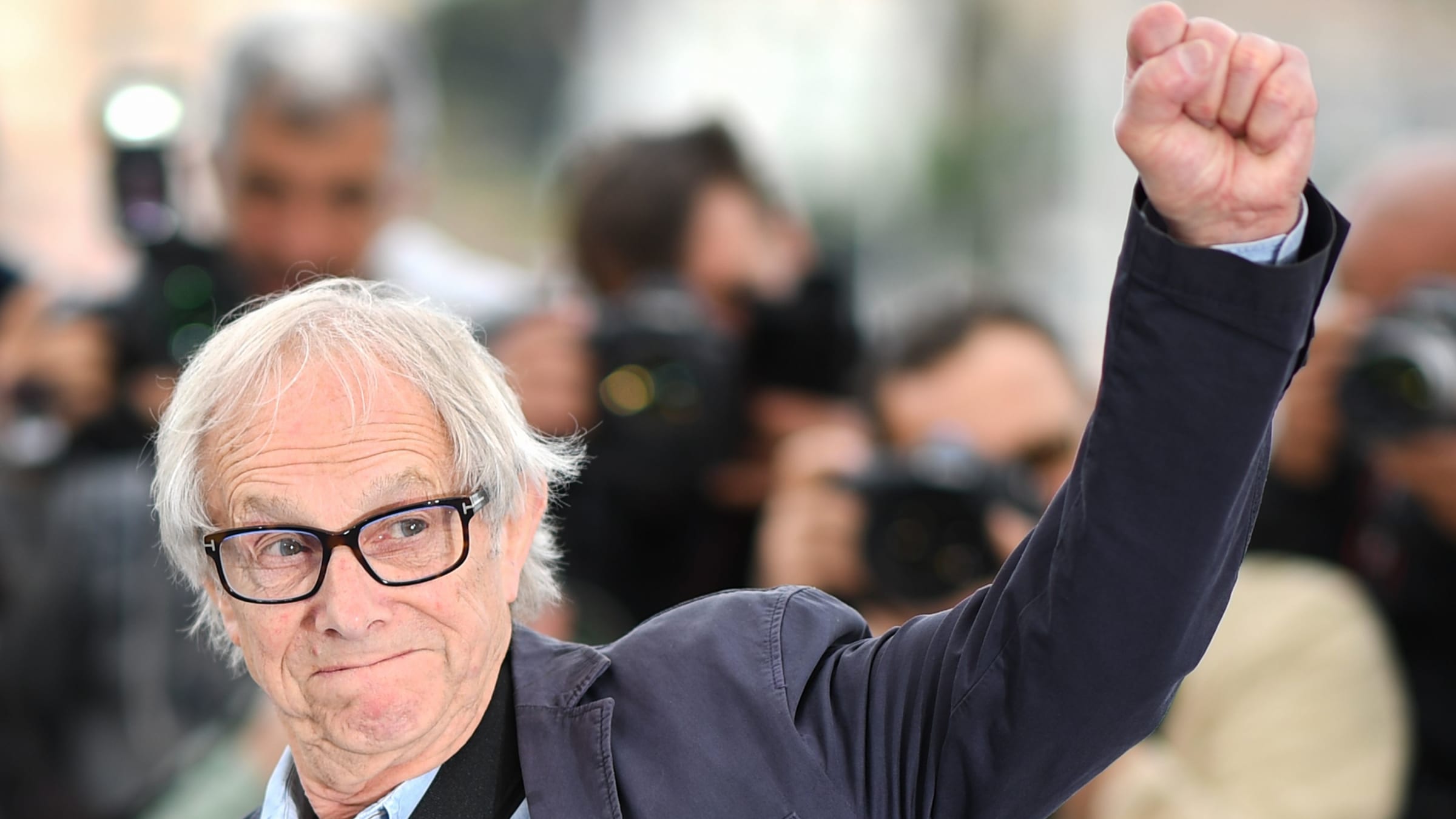
Ken Loach
Ken Loach

The power of the film is not only in the painful realism with which it depicts inhumane working conditions and the neoliberal, technocratic logic that shape them, but also in its attention to the often humorous, lighthearted, and tender dynamics of a family and the community around them. Loach (and screenwriter Laverty) understood that while most people “put on a front at the job, when you’re at home, that’s when feelings emerge,” offers Loach. “At home—that’s when people lose it.” Sorry We Missed You is as much about care as it is abuse, and as much about the insight and intelligence of working-class people as it is about the various manipulations and distortions the ruling classes (and their henchmen) place upon them.

But, of course, the family isn’t made up of angels and martyrs—their circumstances are both structural and personal. Ricky seems to buy into the promises of the gig economy, even as he appears steamrolled by its overwhelming precariousness. By focusing on one family, Loach explained, the film is able to trace “how workers changed over the last 40 years since [former Prime Minister Margaret] Thatcher’s determination to cut their living standards.”

Read more

Left-wing British film and television producer Tony Garnett dead at 83

Garnett’s career spanned 50 years, but he is identified above all with one of the most significant and creative periods in the history of television drama in the UK.

The highly respected film and television producer, writer and director Tony Garnett died on January 12 after a short illness, aged 83.

Garnett was born Anthony Edward Lewis on April 3, 1936, into a working-class family in Birmingham. His mother died when he was just five years old, of septicaemia two days after a backstreet abortion during the Second World War. His father, a munitions worker, committed suicide 19 days later.

Tony Garnett
Tony Garnett

Garnett’s career spanned 50 years, but he is identified above all with one of the most significant and creative periods in the history of television drama in the UK.

Originally an actor, he appeared in television’s The Boys (1962) and Z Cars (1962) and played several small parts in An Age of Kings (1960), the BBC’s influential production of Shakespeare’s history plays.

He moved behind the camera when he was hired as an assistant story editor at the BBC working on The Wednesday Play, which ran from October 1964 to May 1970 and aired more than 170 plays.

This famed series, which addressed social issues before an audience of millions, included the likes of Up the Junction (1965, about abortion), Cathy Come Home (1966, about homelessness), The Lump (1967, about casualised labour in the building industry), In Two Minds (1971, about mental illness as a social problem) and The Big Flame (1969, about a workers’ revolt on the docks), all produced by Garnett. During this period he began long associations with writer Jim Allen, dramatist David Mercer and, most notably, director Ken Loach.

His producing credits include Loach’s Kes (1969), After a Lifetime (1971), Family Life (1971—the film version of In Two Minds), Days of Hope (1975), The Price of Coal (1977) and Black Jack (1978), as well as Roy Battersby’s The Body (1970), Mike Leigh’s Hard Labour (1973), Julien Temple’s Earth Girls Are Easy (1985), Roland Joffe’s Fat Man and Little Boy (1989) and Hettie Macdonald’s Beautiful Thing (1996).

Garnett came into contact with Gerry Healy and the Socialist Labour League, the British Trotskyists, in the late 1960s. Although he never joined the Trotskyist movement, he was instrumental in organising discussions among actors, writers and directors, including Loach, Mercer, Roy Battersby and Corin and Vanessa Redgrave, that led to important gains within these circles. Playwright Trevor Griffiths depicted those meetings in his play, The Party (1973).

Read more

Ken Loach – all his films ranked! 

From his groundbreaking dramas of the 60s, through the early-90s resurgence to the unexpected box office successes of recent years, we assess the director’s output

My Name Is Joe (1998)

Loach didn’t exactly discover Peter Mullan, who had been bobbing about for years – and had even played one of the builders in Riff-Raff (see below) – but he gave him a tremendous showcase in what turned out to be the finest of Loach’s Scotland-set films. Mullan plays the classic Loachian male: struggling with demons, hoping to be redeemed by love but dragged down by misplaced loyalties. It’s Mullan’s charisma that puts this one over the top, both ferocious and tender as the film requires it [ . . . ]

See all 1-50 at THE GUARDIAN: Ken Loach – all his films ranked! | Film | The Guardian