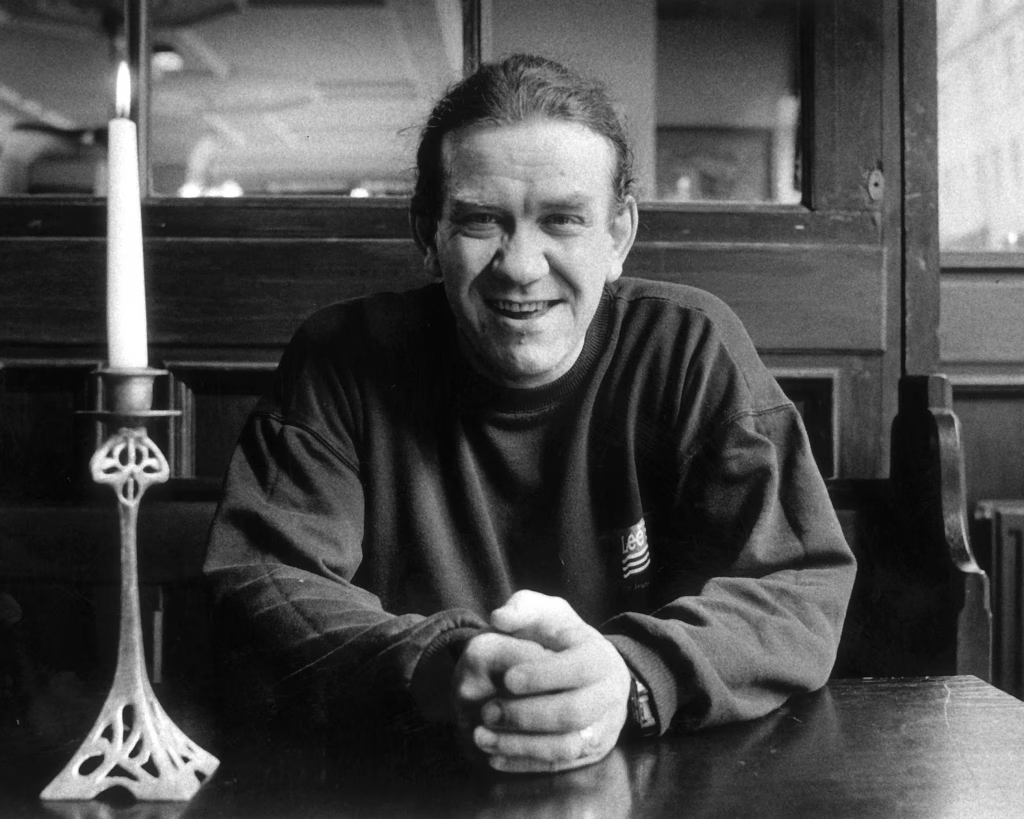
A skilled interpreter and social justice champion, Gaughan is a hero to the likes of Richard Hawley and Billy Bragg. Yet much of his work has been stuck in limbo for decades – until a determined fan stepped in
By Jude Rogers
‘It felt to me as if the world had forgotten about the Frank Sinatra or Elvis Presley of folk, or a singular figure in the mould of Willie Nelson, Johnny Cash or Richard Thompson.” So says Colin Harper, curator of a slew of new releases celebrating the stunning music of Scottish musician Dick Gaughan. Harper had recently reconnected with his music after several decades, “and I couldn’t believe the quality of it. His singing and guitar playing were astonishing – he performed traditional songs and championed social justice so powerfully.”
But if you haven’t heard of the 77-year-old Gaughan, it’s not surprising: much of his work has been unavailable for years, the rights to it having been claimed by the label Celtic Music, who have not made it available digitally. Gaughan doesn’t recall receiving a royalty statement from the company in 40 years. He is battling for ownership and, in turn, hopes to help other veteran folk artists regain control of their catalogues. “To find that the music I made, that I put a lot of work into, is just not available – it’s like your life isn’t available,” he says.
Born in Glasgow in 1948, and raised in Leith in an impoverished musical family, Gaughan became a jobbing musician at 22, later recording 12 solo albums and multiple collaborations. Capable of both stunning delicacy and fiery spirit in his performances, he recorded nine sessions for John Peel (solo and in groups), who said during one of his 1977 shows: “He’s a singer so good that prolonged exposure to him could drive you daft.”
Gaughan became a much-loved regular at folk clubs up and down the country. Later in his career, he brilliantly led Emmylou Harris, Kate and Anna McGarrigle and Kate’s 21-year-old son Rufus Wainwright on folk ballad Wild Mountain Thyme, on a 1995 episode of Scottish TV show Transatlantic Sessions. “I was so lucky to work with Dick Gaughan at an impressionable age,” says Wainwright. “His ability affected my singing for the duration.”
Richard Hawley also saw him in the 2000s at Greystones folk club in Sheffield. “It was very quickly apparent to me that this man was a force to be reckoned with,” he says. “It was a night of powerful song that I’ll never forget.”
